
 Small plate,
The short version: GLP-1 can be associated with reduced appetite and changes in how much food someone wants to eat. When you're eating less, it gets harder to get enough protein, fibre, vitamins, minerals and fluids. Instead of forcing large meals, it helps to focus on smaller, nutrient-dense meals and snacks that are easier to manage.
Picture this: you sit down for a meal you'd normally enjoy, but halfway through making it you realise you don't really feel hungry. You manage a few bites and suddenly you've had enough. For people on a GLP-1, eating can feel very different from before. The challenge becomes making sure the smaller amount still gives your body what it needs.
Why appetite can change on a GLP-1
GLP-1 is a naturally occurring hormone involved in several processes, including appetite and glucose regulation. It acts on pathways that can change appetite and eating patterns: feeling satisfied sooner, feeling less hungry between meals, or simply having less interest in food.
When you're eating less overall, the focus shouldn't only be on how much food you're eating, but on what it provides. If portions get smaller or meals get skipped regularly, it becomes easier to fall short on nutrients. The goal isn't to make eating complicated. It's to make the food you can eat work harder.
Protein is worth paying attention to
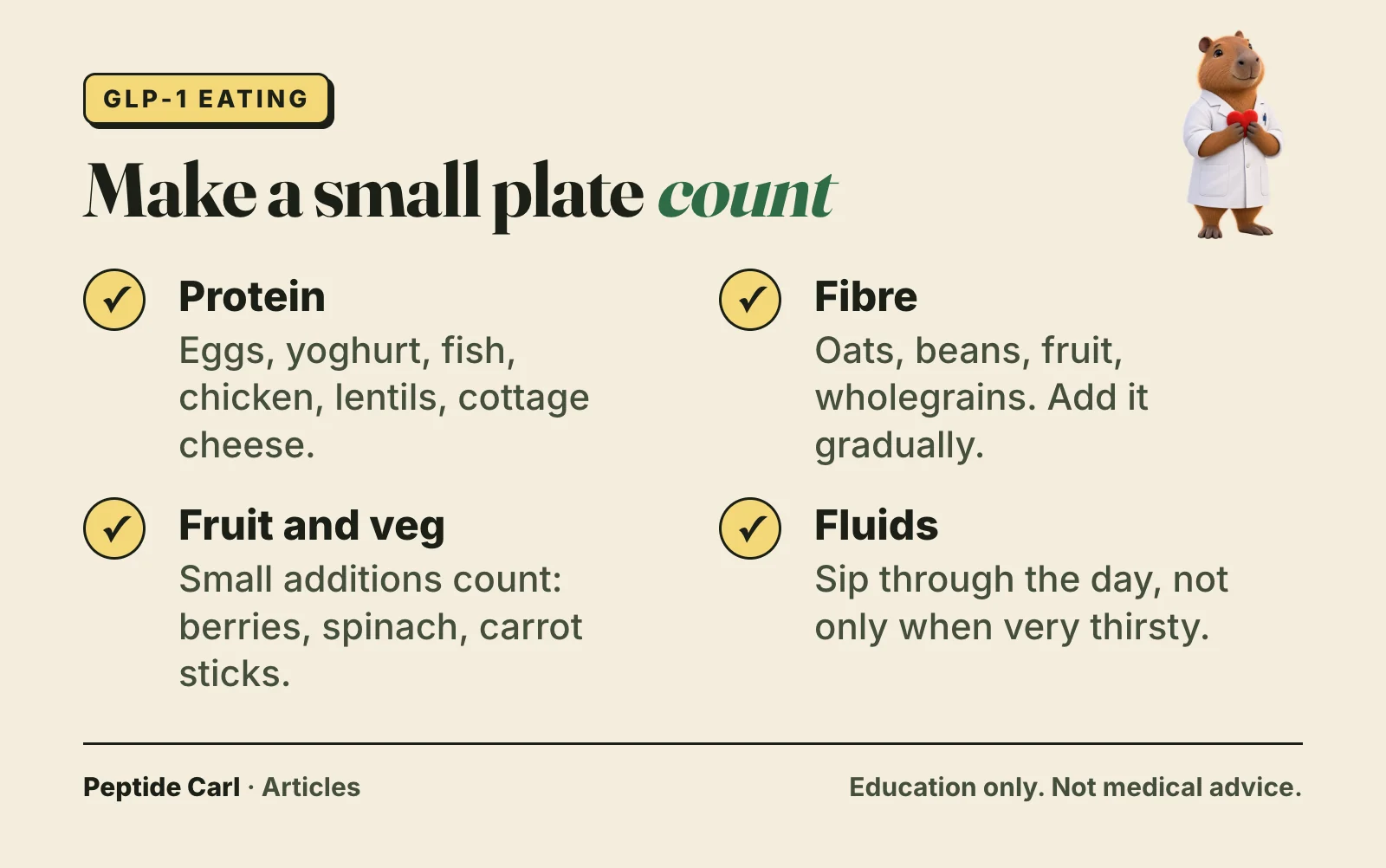
Protein is one of the major nutrients your body needs, and it plays an important role in maintaining and repairing body tissues. Good sources include eggs, fish, chicken and other meats, milk and yoghurt, beans and lentils, nuts and seeds, and cottage cheese.
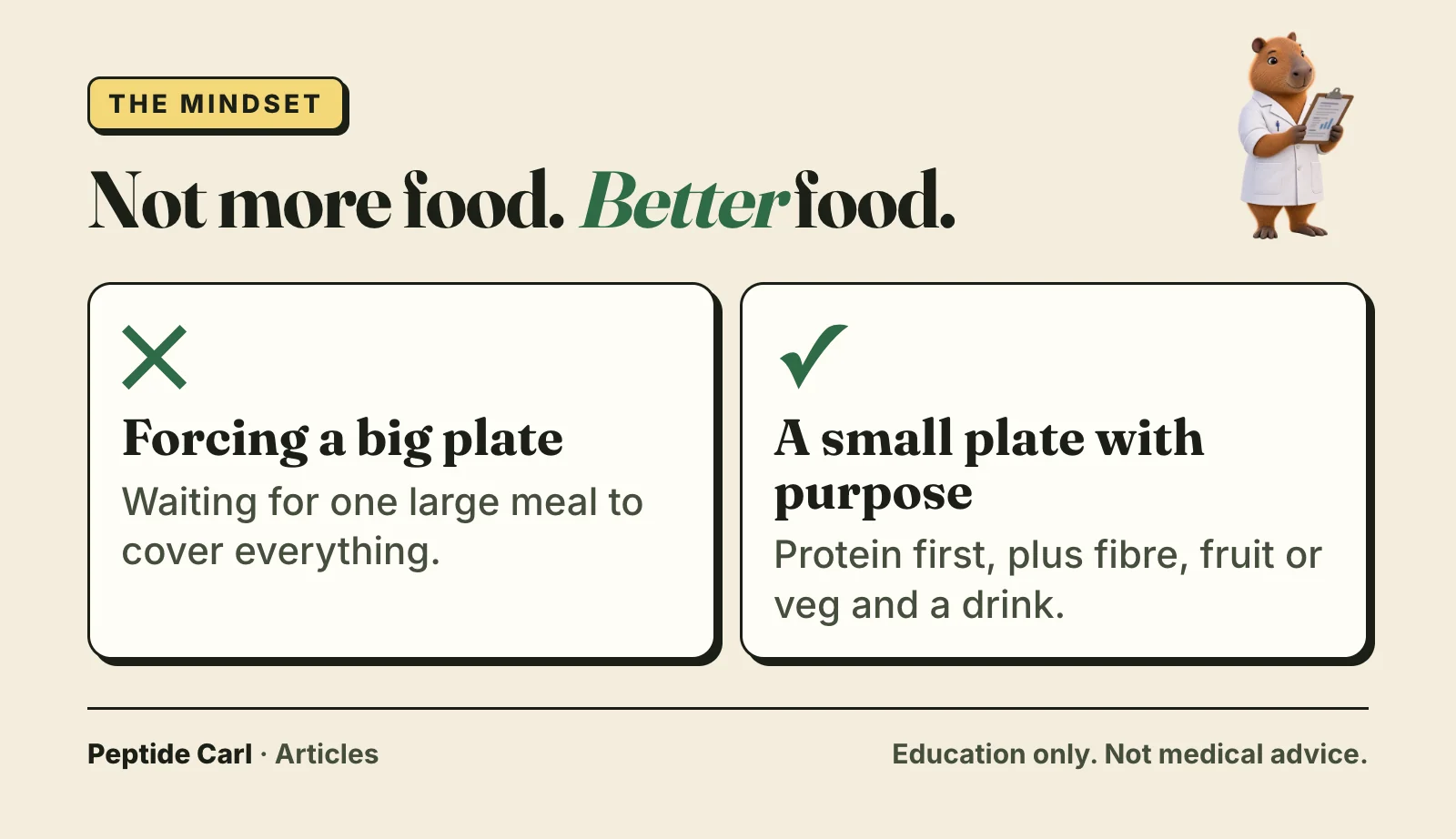
When appetite is low, a smaller meal with a protein source can be easier than a big plate. Yoghurt with fruit and seeds may feel far more manageable than a large breakfast. Use the same idea through the day: look for small chances to add protein rather than waiting for one big meal to cover it.
Don't forget fibre
Fibre is found in oats, beans and lentils, fruit, vegetables, brown rice, wholegrain bread and cereals, and chia and flaxseed. It's particularly useful for normal digestive health, but everyone's tolerance is different. A lot of fibre at once may not agree with you, especially when your eating pattern has changed, so adding fibre-rich foods gradually is more practical than overhauling your diet overnight.
Small meals can still be nutritious
One of the most useful shifts is to stop thinking a nutritious meal has to be a large one. Some easy combinations:
| Food | Main focus | Easy combination |
|---|---|---|
| Greek yoghurt | Protein | Fruit and chia seeds |
| Eggs | Protein and other nutrients | Wholegrain toast |
| Oats | Fibre and carbohydrates | Milk, yoghurt or seeds |
| Hummus | Fibre and plant protein | Carrot or pepper sticks |
| Lentil soup | Protein and fibre | Vegetables and wholegrain bread |
| Cottage cheese | Protein | Fruit or wholegrain crackers |
| Smoothie | Several nutrients | Milk, yoghurt, berries and oats |
The idea isn't a perfect meal every time. It's making the food you do eat as useful as possible: when your appetite is smaller, think nutritional value rather than bigger portions.
What about fruit and vegetables?
Fruit and vegetables bring vitamins, minerals, fibre and other naturally occurring compounds, and they work in small portions alongside other foods: berries in yoghurt, spinach with eggs, sliced fruit on oats, vegetables with hummus. You don't need a huge bowl of vegetables. Small additions count too.
Hydration still matters
Water is the simplest way to stay hydrated, and when appetite changes, fluid intake can change too: eating less food means less fluid from things like fruit, vegetables, soup and yoghurt. Needs vary with activity, climate and health, so there's no single number for everyone. A simple approach is to make drinking a regular part of your day rather than waiting until you're very thirsty.
Keep meals simple when appetite is inconsistent
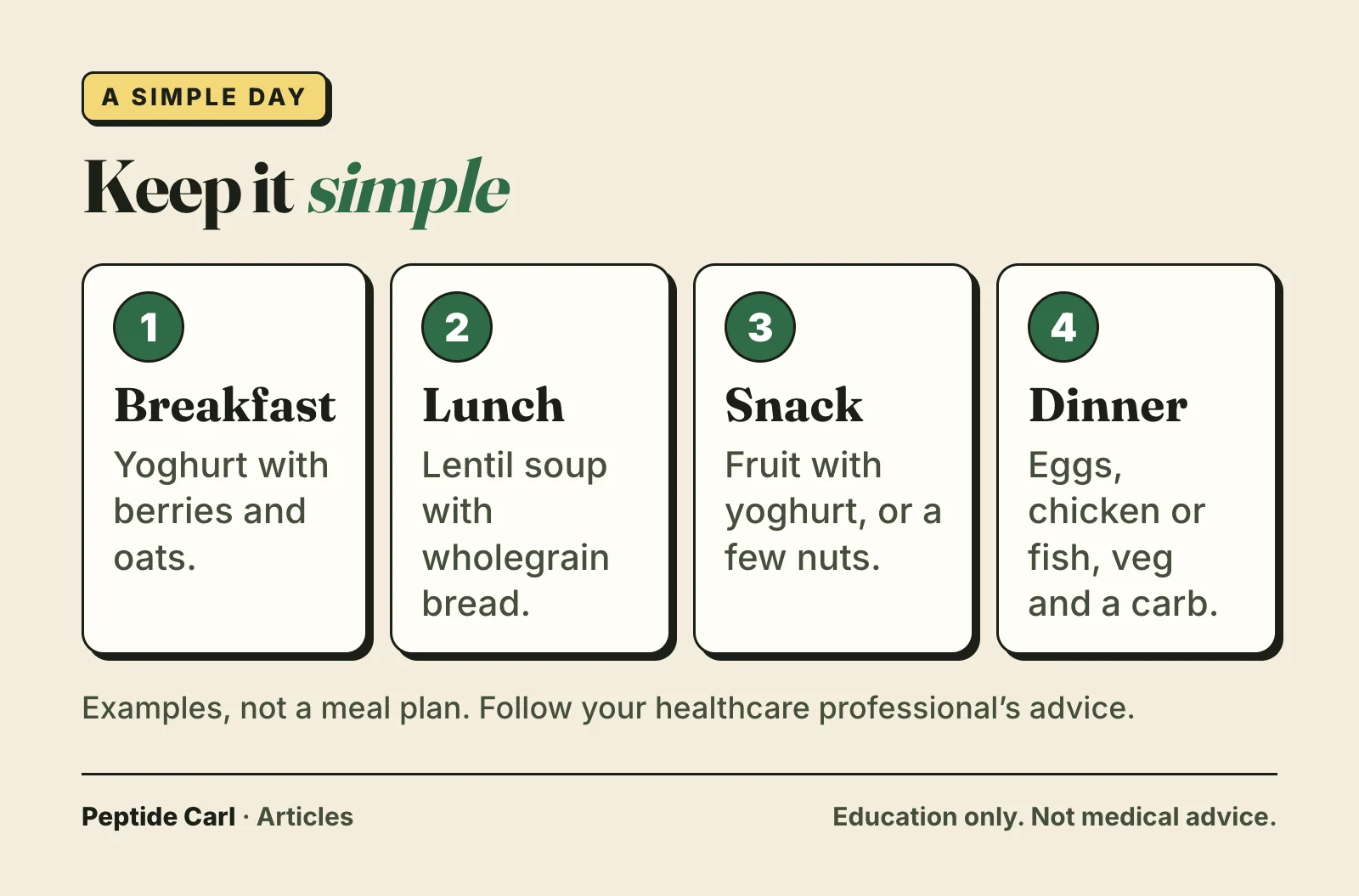
When you're not very hungry, complicated meals become a chore. A few easy options:
- Breakfast: yoghurt with berries and oats.
- Lunch: a small bowl of lentil soup with wholegrain bread.
- Snack: fruit with yoghurt, or a small handful of nuts.
- Dinner: eggs, chicken or fish with vegetables and a carbohydrate such as potatoes, rice or wholegrain bread.
These are examples, not a meal plan. Your choices should reflect your preferences, dietary needs and any advice from your healthcare or nutrition professional.
Make the food you eat count
Instead of focusing on eating as little as possible, ask what each meal or snack provides. Is there protein? Some fibre? Fruit or vegetables? Are you drinking enough? You don't need a yes to every question at every meal: your overall pattern matters more than any single plate. For the vitamins and minerals side, see On a GLP-1? The nutrients that matter.
What if you're struggling to eat?
Sometimes a few changes to meal size and food choice are enough. Other times eating becomes genuinely difficult. Persistent nausea, vomiting, difficulty swallowing, significant unintended weight loss or ongoing digestive problems aren't something to just put up with: speak to your prescribing healthcare professional. A registered dietitian can also help you find practical ways to improve your intake.